|
Overview Middle East
Horseback riding tours
Israel
Jordan
Oman
Northern Africa
Morocco
|

|
|

|
|
|
|
Horseback riding vacations in
Jordan
Jordan is a land of romantic associations – from
Lawrence of Arabia to the hidden city of Petra. Hidden Trails offers a
fantastic opportunity to discover the treasures of Jordan on a horseback ridingholiday – away from the tourist hordes, in some deeply stunning locations.
Whether you bask in the glory of the hidden city of Petra, spend a lazy day
bathing in the Dead Sea, or follow in the footsteps of that great equestrian,
Lawrence of Arabia, Jordan promises a mystical holiday experience. Jordan is
one of the most welcoming hospitable and countries in the world. You will find
the locals eager to talk to you and welcome you into their homes.
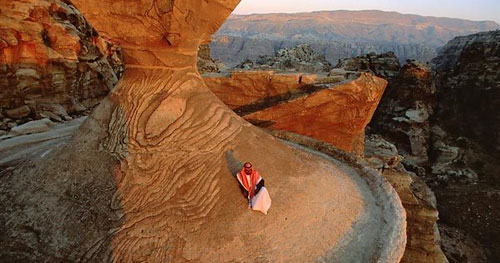
Horse Riding in Jordan
The Wadi Rum mirrors a moonscape of ancient valleys and towering, weathered
sandstone mountains rising out of the white and pink colored sands. A scene
right out of the exploits of Lawrence of Arabia and the authentic setting of the
film, the Wadi Rum presents many opportunities for long canters across high
plateaus. Traveling along old caravan roads offers an encounter with an
altogether different world, complete with possible personal invites from the
desert dwelling Bedouins.
The highlight of this horse-riding trip is a visit to Petra – the Hidden City.
Petra, the jewel in the crown of Jordan's antiquities, has been declared by
popular ballot one of the 'new' Seven Wonders of the World. The magnificent
rock-hewn city of the Nabateans hardly needed further billing (since Jean Louis
Burckhardt discovered it in the 19th century, it has been a favorite destination
for Europeans) but at sunset on a winter's day, when the rose-pink city catches
alight, it's easy to see why it has charmed a new generation of visitors.
Jordan Weather and Climate
Jordan is blessed with a Mediterranean climate for pleasurable year-round
travel. Amman is sunny and cloudless from May to early November, with average
temperatures around 23° C (73 F). Springtime brings optimal weather, lush with
greenery, and autumn is equally mild and pleasant. July and August are hot and
dry but not oppressive. Because of the capital city’s elevation, evenings are
cool.

Explore more North Africa
Horse Riding Vacations
|
|
Holidays on horseback in Jordan
See Mini Country Guide
|
Below is a list of our trips in this area with video clips.
 Click on the 'watch video' icon

to view a video clip,
Jordan
Travel restrictions
Airports in Jordan opened with limited routes on September 8th, 2020.
Travelers entering Jordan must register on the Gateway2Jordan platform (https://www.gateway2jordan.gov.jo/form/ ) to receive a QR code for entry to Jordan
Effective January 26th, 2021, passengers arriving into Jordan no longer have to self-quarantine for 7 days. Only persons who test positive for COVID-19 are required to quarantine.
Effective March 1st 2022, individuals who test positive for COVID-19 must quarantine for 5 days, regardless of whether they are asymptomatic or symptomatic.
Persons who are positive for COVID-19 but are asymptomatic must quarantine at home for seven days and then take a PCR test
Measures taken by the government
On June 4th, 2020, the Government of Jordan announced the launch of a website which provides updates and FAQs about the COVID-19 situation in Jordan and explains the re-opening of the country’s various sectors: https://corona.moh.gov.jo/en
The Government of Jordan continues to implement social distancing regulations and mandatory mask wearing in business establishments, public transportation, and government facilities due to COVID-19.
Effective March 1st 2022, access to assemblies, such as parties and other ceremonies, is no longer conditioned on completing a PCR test. Those attending must be double vaccinated per Defense Order No 35. of 2021.
Effective March 24th, 2022 due to the improvement of the epidemiological situation in Jordan, the Government of Jordan has announced the following:
- Mosques and places of worship may operate at full capacity. Face masks are still required.
- Indoor and outdoor gatherings are permitted. Face masks are still required for indoor gatherings.
- Public facilities may operate at full capacity.
- Restaurants and venues may operate at full capacity, without the need for social distancing or limiting the number of people at each table.
- Face masks are no longer required outdoors.
Testing
The cost of COVID-19 testing in Jordan is 15-20 JD. Individuals are responsible for the cost of the test.
Most labs in Jordan communicate the initial test results through PDF sent by text message. However, some labs require individuals to pick up a hard copy of the results. Each lab will clarify the process of obtaining results after conducting the COVID-19 test.
The Ministry of Health provides a list (in Arabic) of 33 laboratories in Jordan authorized to perform COVID-19 diagnostic testing: https://corona.moh.gov.jo/ar/page/1057/Laboratories
Some of these labs include: Biolabs, Alsultan Laboratories, Precision Medical Laboratories, Med Laboratories, The Specialty Hospital, Mega Labs, Quest Labs, and Geno Labs.
Emergency number (related to COVID-19) while visiting the country
Ministry of Health (MoH) Public Health Emergency Operation Center (PHEOC) hotline: +962 77 8410186 (mobile) for English speakers or +962 6 500 4545 (landline) or 111.
Source:
US Embassy in Jordan https://jo.usembassy.gov/covid-19-information/
Published on January 11th 2023 (checked on April 5th 2023)
Jordan Tourism Board: COVID-19 Update https://www.myjordanjourney.com/coronavirus-update
Published on December 1st 2022 (checked on April 5th 2023)
For more information please visit our COVID-19 Updates page at https://www.hiddentrails.com/article/covid19update.aspx
|
|
Jordan
At A glance
Capital City: Amman
Land size: 88,802 sq km
Population: 10,998,531 (2022 est.)
Official language: Arabic
Currency: Jordanian Dinar (د.ا / JOD)
UNESCO properties and sites:
- As-Salt - The Place of Tolerance and Urban Hospitality
- Baptism Site “Bethany Beyond the Jordan” (Al-Maghtas)
- Petra
- Quseir Amra
- Um er-Rasas (Kastrom Mefa'a)
- Wadi Rum Protected Area
Source: https://www.cia.gov/the-world-factbook/countries/jordan/
Jordan offers many experiences that will leave you in awe. Begin your adventure by exploring the vibrant capital city of Amman, where modernity meets ancient traditions. Explore the serene shores of the Dead Sea, floating effortlessly in its mineral-rich waters and experiencing its therapeutic benefits. Immerse yourself in the warm hospitality of the Jordanian people, experiencing their rich traditions and embracing the traditional Bedouin culture.
Jordan offers a haven for equestrian enthusiasts, with its historical sites, diverse terrains, and warm hospitality. Discover the awe-inspiring Petra, riding along the ancient carved facades of this UNESCO World Heritage Site. Journey into the otherworldly desert of Wadi Rum, where sandstone mountains and vast sand dunes create a surreal backdrop for horseback riding adventures.
Get ready to create lifelong memories as you uncover the soul of Jordan from the back of a horse.
Brief History
Following World War I and the dissolution of the Ottoman Empire, the League of Nations awarded Britain the mandate to govern much of the Middle East. Britain demarcated a semi-autonomous region of Transjordan from Palestine in 1921 and recognized ABDALLAH I from the Hashemite family as the country's first leader. The Hashemites also controlled Hijaz, or the western coastal area of modern day Saudi Arabia until 1925, when they were pushed out by Ibn SAUD and Wahhabi tribes. The country gained its independence in 1946 and thereafter became The Hashemite Kingdom of Jordan.
Jordan's long-time ruler, King HUSSEIN (1953-99), successfully navigated competing pressures from the major powers (US, USSR, and UK), various Arab states, Israel, and Palestinian militants, which led to a brief civil war in 1970 referred to as "Black September" and ended in King HUSSEIN's ouster of the militants from Jordan. Jordan's borders also have changed. In 1948, Jordan took control of the West Bank and East Jerusalem, eventually annexing those territories in 1950 and granting its new Palestinian residents Jordanian citizenship. In 1967, Jordan lost the West Bank and East Jerusalem to Israel in the Six-Day War but retained administrative claims until 1988 when King HUSSEIN permanently relinquished Jordanian claims to the West Bank in favor of the Palestinian Liberation Organization (PLO). King HUSSEIN signed a peace treaty with Israel in 1994, after Israel and the PLO signed the Oslo Accords in 1993.
Jordanian kings continue to claim custodianship of the holy sites in Jerusalem by virtue of their Hashemite heritage as descendants of the Prophet Mohammad and agreements with Israel and Jerusalem-based religious and Palestinian leaders. After Israel captured East Jerusalem in the 1967 War, it authorized the Jordanian-controlled Islamic Trust, or Waqf, to continue administering affairs in the Al Haram ash Sharif/Temple Mount holy compound, and the Jordan-Israel peace treaty reaffirmed Jordan's "special role" in administering the Muslim holy shrines in Jerusalem.
King HUSSEIN died in 1999 and was succeeded by his eldest son, ABDALLAH II, who remains the current king.
Source: https://www.cia.gov/the-world-factbook/countries/jordan/
Cultural Insights
An ancient legend tells of an Arabian shepherd who six thousand years ago put his supply of milk in a pouch made from a sheep's stomach before making a journey across the desert. The rennet in the lining of the pouch, combined with the heat of the sun, caused the milk to form curds, and cheese was discovered. Bedouin farmers keep herds of goats and sheep whose milk is used to produce cheese and yogurt.
The main meal typically is served during the middle of the afternoon. A covering is placed on the floor, with a large tray of rice and meat placed in the center surrounded by small dishes of yogurt and salad. Torn pieces of bread are folded in half and used to scoop the food. The left hand is never used to feed oneself.
Greetings and farewells are lengthy and sincere. Even answering a telephone involves saying "how are you?" in several different ways.
Visitors and/or friends frequently are invited into homes for dinner, where they are showered with kindness and food.
Women dress modestly and often are offended by exposed flesh.
Most Muslims do not drink alcohol.
Shoes are always removed before entering a mosque, and this custom extends to homes as well.
Same-sex friends hold hands, hug, and kiss in public, but there is limited touching between men and women. A man does not shake hands with a woman unless she offers her hand first.
Source: https://www.everyculture.com/Ja-Ma/Jordan.html
Transportation
By Air
Queen Alia International Airport is Jordan’s main international gateway, located about 20 miles south of Amman—about half an hour by car.
King Hussein International Airport is located in Aqaba, about 20 minutes from the town center and offers daily flights to/from Amman and the region.
Source: https://www.myjordanjourney.com/getting-there
Money
Cash machines are available throughout Amman and in other major towns and cities. ATMs are less widely available in rural areas, though most petrol stations on major roads offer ATMs.
Source: https://www.gov.uk/foreign-travel-advice/jordan
Health
Medical facilities outside Amman are basic. In an emergency you should seek treatment in Amman. Emergency treatment is also available in Aqaba. Make sure you have adequate travel health insurance and accessible funds to cover the cost of any medical treatment abroad and repatriation.
If you need emergency medical assistance during your trip, dial 911 and ask for an ambulance. You should contact your insurance/medical assistance company promptly if you are referred to a medical facility for treatment.
When called, ambulances are often slow to arrive and personnel generally have only a basic level of training.
Doctors and hospitals often expect immediate cash payment or a high deposit for services.
Exercise caution when purchasing medication overseas. Pharmaceuticals, both over the counter and requiring prescription in the United States, are often readily available for purchase with little controls. Counterfeit medication is common and may prove to be ineffective, the wrong strength, or contain dangerous ingredients. Medication should be purchased in consultation with a medical professional and from reputable establishments.
In many areas, tap water is not potable. Bottled water and beverages are generally safe, although you should be aware that many restaurants and hotels serve tap water unless bottled water is specifically requested. Be aware that ice for drinks may be made using tap water.
Seasonal dust storms that envelop the country for days or weeks each spring may significantly aggravate respiratory conditions such as asthma or sinus problems.
Source: https://www.gov.uk/foreign-travel-advice/jordan
https://travel.state.gov/content/travel/en/international-travel/International-Travel-Country-Information-Pages/Jordan.html
Electricity
Jordan operates on a 230V supply voltage and uses type B, C, D, F, G and J plugs.
The Type B electrical plug has two flat parallel pins and a round grounding (or earth) pin. The earth pin is longer than the other two so that the device is grounded before the power is connected. As with the type A plugs, the American and Japanese versions vary slightly.
The Type C electrical plug (or Europlug) is a two-wire plug that has two round pins. It fits into any socket that accepts 4.0 – 4.8 mm round contacts on 19 mm centres. They are being replaced by E, F, J, K or N sockets which work perfectly with Type C plugs.
The Type D electrical plug has three large round pins in a triangular pattern. Type M plugs are often used alongside Type D plugs for larger appliances and as a result, some sockets work with both Type D and Type M plugs.
The Type F electrical plug (also known as a Schuko plug) has two 4.8 mm round pins spaced 19 mm apart. It is similar to the Type E plug but has two earth clips on the side rather than a female earth contact. The CEE 7/7 plug was developed to work with sockets E and F and has grounding clips on both sides (to work with Type F sockets) and a female contact (to accept the grounding pin of the type E socket).
The Type G electrical plug has three rectangular blades in a triangular pattern and has an incorporated fuse (usually a 3 amps fuse for smaller appliances such as a computer and a 13 amps one for heavy duty appliances such as heaters). British sockets have shutters on the live and neutral contacts so that foreign objects can’t be introduced into them.
The Type J plug has two round pins as well as a grounding pin. Although the Type J plug looks a lot like the Brazilian Type N plug it is incompatible with the Type N socket as the earth pin is further away from the centre line than on Type N. However, Type C plugs are perfectly compatible with Type J sockets.
Source: https://www.iec.ch/world-plugs
Communication
Time zone in Jordan: Arabia Standard Time (GMT +2)
International country code – 962
The country has near-comprehensive LTE network coverage. (2022)
Source: https://www.cia.gov/the-world-factbook/countries/jordan/
Phrasebook
| English |
Arabic |
| Hello! |
Marĥabān |
| Goodbye |
Ilā al-liqā' |
| Good morning |
Sabāĥu al-khayr |
| Good evening |
Masa' alkhayr |
| Good night |
Tusbiĥu 'alā khayr / Tusbiĥina 'alā khayr |
| Please |
Min fadlik |
| Thank you |
Shukrān lak |
| Yes |
Na'am |
| No |
Lā |
Source: http://www.nemolanguageapps.com/phrasebooks/arabic
Entry Requirements
For North American travelers, visas can be obtained when arriving in Jordan at the airport or any border crossing (except the King Hussein/Allenby Bridge).
Visitors are required to have a valid passport with an expiration date no less than six months from their time of travel and may obtain a visa at any Jordanian embassy, consulate, or legation abroad. Certain nationalities are required to obtain a visa from a consulate prior to departure. For more detailed information please visit www.jordanembassyus.org
Visas must be paid in the local currency and can be extended at any police station. A departure tax of 5 JD is paid at any border crossing except the airports.
Source: https://www.myjordanjourney.com/getting-there
Embassies and Consulates
U.S. Embassy in Amman
Abdoun, Al-Umawyeen St.
Amman
Phone: +962 6 590 6000
Embassy of Canada in Amman
133 Zahran Street
Amman
Phone: +962 6 590 1500 Ext. 3341 / 3342
Source: for USA https://www.usembassy.gov/
For Canada: https://travel.gc.ca/assistance/embassies-consulates
UNESCO Sites
As-Salt - The Place of Tolerance and Urban Hospitality
Built on three closely-spaced hills in the Balqa highland of west-central Jordan, the city of As-Salt, was an important trading link between the eastern desert and the west. During the last 60 years of the Ottoman period, the region prospered from the arrival and settlement of merchants from Nablus, Syria, and Lebanon who made their fortunes in trade, banking, and farming. This prosperity attracted skilled craftsmen from different parts of the region who worked on transforming the modest rural settlement into a thriving town with a distinctive layout and an architecture characterized by large public buildings and family residences constructed of local yellow limestone. The site’s urban core includes approximately 650 significant historic buildings exhibiting a blend of European Art Nouveau and Neo-Colonial styles combined with local traditions. The city’s non-segregated development expresses tolerance between Muslims and Christians who developed traditions of hospitality evidenced in Madafas (guest houses, known as Dawaween) and the social welfare system known as Takaful Ijtimai’. These tangible and intangible aspects emerged through a melding of rural traditions and bourgeois merchants’ and tradespeople’s practices during the Golden Age of As-Salt’s development between 1860s to 1920s.
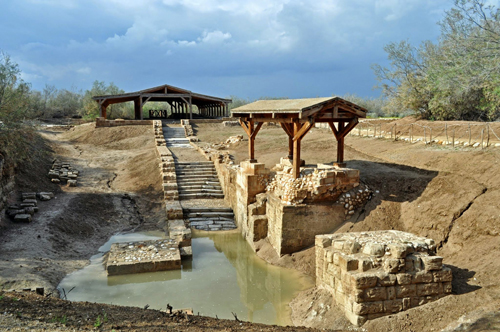
Photo by Camille Loiseau
Baptism Site “Bethany Beyond the Jordan”
Situated on the eastern bank of the River Jordan, nine kilometres north of the Dead Sea, the archaeological site consists of two distinct areas: Tell Al-Kharrar, also known as Jabal Mar-Elias (Elijah’s Hill) and the area of the churches of Saint John the Baptist near the river. Situated in a pristine natural environment the site is believed to be the location where Jesus of Nazareth was baptized by John the Baptist. It features Roman and Byzantine remains including churches and chapels, a monastery, caves that have been used by hermits and pools in which baptisms were celebrated, testifying to the religious character of the place. The site is a Christian place of pilgrimage.
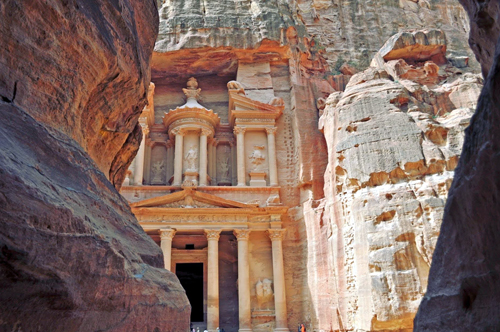
Photo by Camille Loiseau
Petra
Inhabited since prehistoric times, this Nabataean caravan-city, situated between the Red Sea and the Dead Sea, was an important crossroads between Arabia, Egypt and Syria-Phoenicia. Petra is half-built, half-carved into the rock, and is surrounded by mountains riddled with passages and gorges. It is one of the world's most famous archaeological sites, where ancient Eastern traditions blend with Hellenistic architecture.
Quseir Amra
Built in the early 8th century, this exceptionally well-preserved desert castle was both a fortress with a garrison and a residence of the Umayyad caliphs. The most outstanding features of this small pleasure palace are the reception hall and the hammam, both richly decorated with figurative murals that reflect the secular art of the time.
Um er-Rasas (Kastrom Mefa'a)
Most of this archaeological site, which started as a Roman military camp and grew to become a town from the 5th century, has not been excavated. It contains remains from the Roman, Byzantine and Early Muslim periods (end of 3rd to 9th centuries AD) and a fortified Roman military camp. The site also has 16 churches, some with well-preserved mosaic floors. Particularly noteworthy is the mosaic floor of the Church of Saint Stephen with its representation of towns in the region. Two square towers are probably the only remains of the practice, well known in this part of the world, of the stylites (ascetic monks who spent time in isolation atop a column or tower). Um er-Rasas is surrounded by, and dotted with, remains of ancient agricultural cultivation in an arid area.
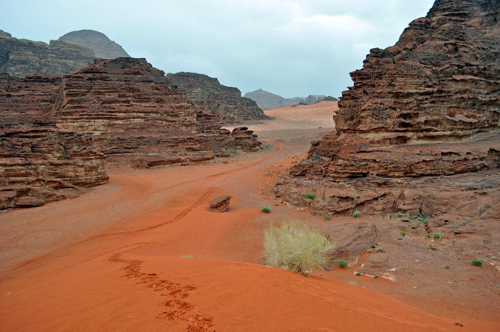
Photo by Camille Loiseau
Wadi Rum Protected Area
The 74,000-hectare property, inscribed as a mixed natural and cultural site, is situated in southern Jordan, near the border with Saudi Arabia. It features a varied desert landscape consisting of a range of narrow gorges, natural arches, towering cliffs, ramps, massive landslides and caverns. Petroglyphs, inscriptions and archaeological remains in the site testify to 12,000 years of human occupation and interaction with the natural environment. The combination of 25,000 rock carvings with 20,000 inscriptions trace the evolution of human thought and the early development of the alphabet. The site illustrates the evolution of pastoral, agricultural and urban activity in the region.
Source: https://whc.unesco.org/en/statesparties/jo
|
|

|
|
|
|